
For borrower financial stability, employment trends are crucial for assessing workout feasibility, as they influence servicing costs associated with non-performing loans, which run markedly higher than those for performing loans so investors assess borrower income stability to project realistic resolution timelines and foreclosure risk before acquisition.
Employment stability analysis requires you to verify borrower income sources, job tenure, and industry volatility before closing on any non-performing note acquisition. You should cross-reference pay stubs, tax filings, and employer verification against the original loan file. Inconsistent employment history often signals repayment risk and shapes your workout strategy, whether pursuing modification, forbearance, or foreclosure timelines.
Key Takeaways
- Investors analyze employment trends in borrower regions to assess income stability and default risk before acquiring non-performing notes.
- FHFA requires Freddie Mac and Fannie Mae to meet specific NPL sale standards established in March 2015 and April 2016.
- Real estate market distress creates opportunities for investors evaluating borrower financial capacity through employment data and upcoming maturity dates.
- Mortgage note investors examine local job markets and wage trends to predict borrower repayment ability on distressed properties.
What Do You Need Before Evaluating Employment Trends?
Evaluating a borrower’s employment trends requires a completed distressed loan analysis, Buckingham Partners recommends organizing income documentation before you review a single pay stub. Skipping this preparation costs you leverage at the negotiation table and blinds you to red flags a seller already knows about. Distressed borrowers across office, retail, and multifamily properties are frequently seeking exits ahead of loan maturity, so you need employment and income context gathered before you place a bid, not after.
Build this foundation in order:
- Pull the complete loan file and flag gaps in income history.
- Cross-reference stated income against tax records or third-party verification sources.
- Assess borrower financial stability using cash flow trends, not just a snapshot balance.
- Confirm current employer status through direct employment verification, since job loss often precedes default.
- Document findings in a standardized file for underwriting comparison.
Why does employment verification matter for note investors?
Employment verification tells you whether a borrower’s default stemmed from a temporary income gap or a permanent loss of earning capacity. That distinction determines whether a workout plan or a foreclosure path makes financial sense. Firms combining rigorous financial due diligence with workout expertise use this data to clear classified assets efficiently.
What background helps investors judge employment risk accurately?
A multidisciplinary background in residential brokerage and property management sharpens your read on troubled debt. This foundation, applied consistently, is what sound due diligence strategies require before you commit capital to any note.
How Do You Verify Employment and Income Documentation?
Verifying employment and income documentation requires a structured, evidence-based process, not a single phone call. You confirm current employment status, cross-check income against loan history, and evaluate whether financial disruption is temporary or chronic. This distinction drives your entire workout strategy.
Follow these steps before making any acquisition or workout decision:
- Request current pay stubs, tax returns, and employer contact information as part of your initial file review.
- Contact the employer directly to confirm active employment status and tenure.
- Cross-reference income against the original loan application to identify gaps or inconsistencies.
- Assess the delinquency timeline against employment history to determine when disruption began.
- Document findings for use in your distressed loan analysis and workout negotiations.
Why Does Employment Verification Matter for Non-Performing Notes?
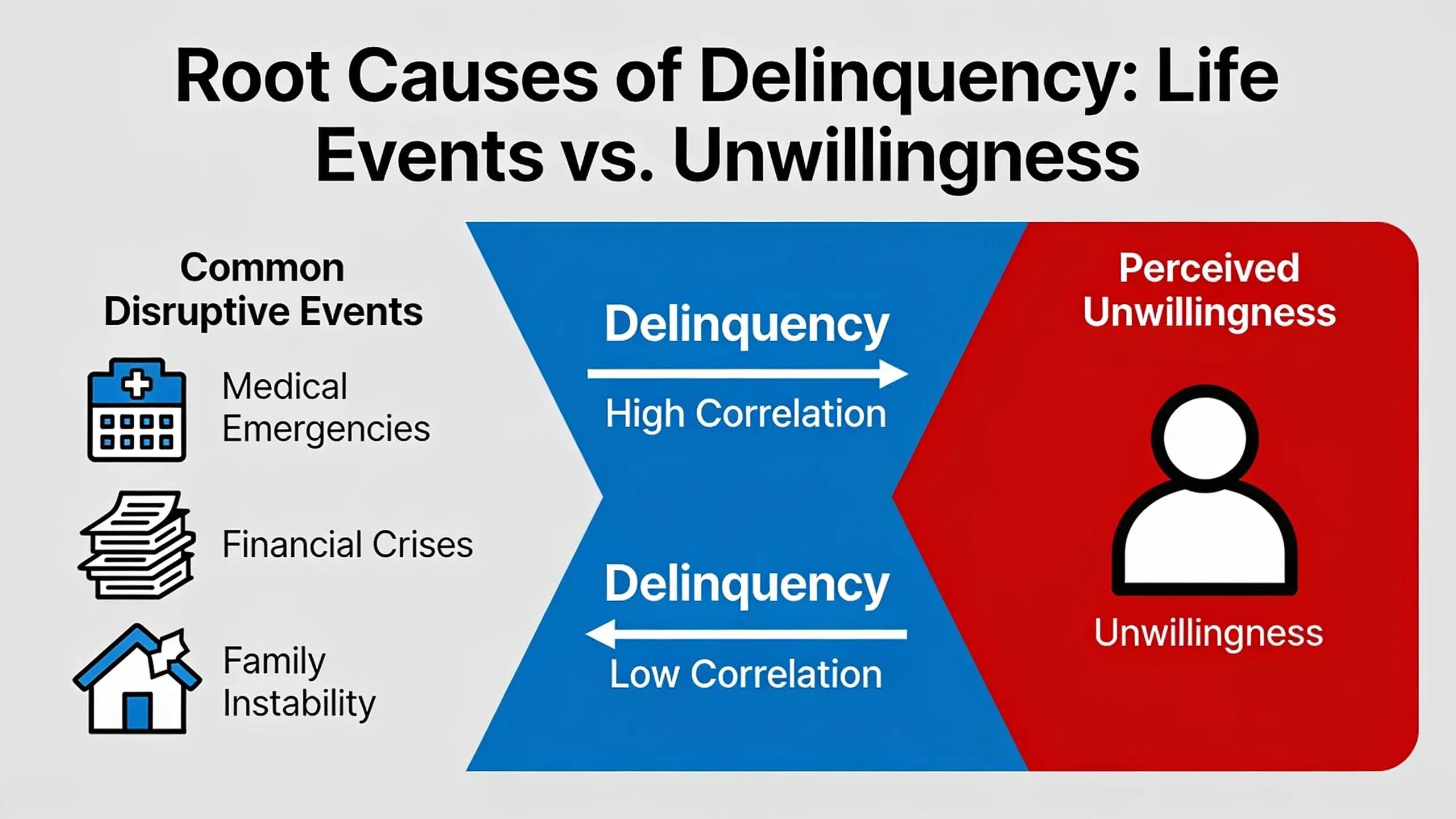
Employment verification matters because most delinquency does not stem from an unwillingness to pay. Life events such as medical emergencies and job loss trigger far more defaults than deliberate nonpayment. You need verification to separate a borrower facing a temporary setback from one facing chronic borrower financial stability problems. Each scenario demands a different resolution path.
How Far Can Delinquency Progress Before Acquisition?
Delinquency can progress for years before a note ever reaches your desk. Loans included in typical non-performing sales run severely delinquent, averaging roughly three years past due. That gap means employment disruptions may have compounded significantly. Your verification process must account for multiple income changes, not just the most recent one.
Keep every borrower touchpoint during verification professional and constructive rather than adversarial; hostile outreach damages cooperation and slows document collection. When you request supporting income records or employment files from a note seller or servicer during evaluation, expect a rapid, confidential turnaround responses within 24 hours with full confidentiality are the standard you should demand before committing capital.

How Do You Gauge Overall Borrower Financial Stability?
You gauge borrower financial stability by combining hard income verification with a disciplined read of the collateral and workout history behind the note. Years of loan originations, workouts, and hands-on ownership of residential and commercial real estate sharpen this judgment far beyond a credit score or a stated-income line on an application.
Non-performing notes trade at a discount for a reason: they demand intensive workout management and carry real foreclosure cost exposure once income turns unstable. That discount only pays off if you can accurately separate a temporary setback from a structural inability to pay. Skipping this step invites losses that erase the discount entirely.
Why does servicing cost jump so much on non-performing loans?
Servicing a non-performing loan costs substantially more per year than servicing a performing loan. That gap traces directly to borrower income instability, forcing more calls, more negotiation, and more legal exposure.
What steps confirm a borrower’s true financial position?
- Pull recent pay stubs, tax returns, and bank statements to confirm current cash flow.
- Cross-check employer status through direct employment verification rather than relying on stale application data.
- Compare debt-to-income ratios against the note’s revised payment structure.
- Document any hardship, whether job loss, medical event, or business disruption, driving the delinquency.
Once you complete that review, run a full distressed loan analysis covering payment history, collateral value, and lien position before deciding on modification, short sale, or foreclosure.
An independent, flexible resolution approach lets you structure terms around what the borrower can actually pay, not a rigid formula. That flexibility, paired with disciplined verification, protects your yield and shortens the path to a performing or resolved asset.
How Does Employment Data Inform Distressed Loan Analysis?
Employment data anchors every credible workout decision. Verified income and job stability determine whether a borrower can sustain a modified payment or whether liquidation remains the only realistic path. Skipping this step leaves you guessing at repayment capacity, and guesswork on a distressed note costs money fast.
Your distressed loan analysis should never treat employment status as a checkbox. Run it as a structured input that shapes every downstream decision, from modification terms to exit timeline.
Why does employment verification matter more on non-performing notes?
Employment verification confirms whether a borrower’s income disruption is temporary or permanent, which changes the entire resolution strategy. A borrower with a new job at comparable pay warrants a different offer than one facing long-term unemployment. Regulatory guidance from agencies overseeing large loan portfolios favors alternatives to foreclosure wherever possible, so your employment findings should feed directly into workout options rather than default liquidation.
What role does financial stability play in structuring a workout?
Assessing borrower financial stability requires more than a pay stub. You need to evaluate:
- Income consistency over the trailing 12 to 24 months
- Employer sector risk (cyclical versus stable industries)
- Secondary income sources and household earners
- Debt-to-income trends since origination
Institutional investors strengthen this analytical bench by structuring joint ventures that pool specialist capabilities and allocate risk across acquisitions. Pairing capital partners with underwriting expertise sharpens employment and income review beyond what a solo investor can achieve alone.
A sound framework also incorporates risk management structures, case study precedent, and regulatory developments that shape investor decisions, as outlined in Buckingham-Partners Joint ventures framework. You should build these inputs into your acquisition checklist before bidding, not after. Once your review confirms a viable workout path, a streamlined resolution strategy positions you for a rapid, discreet exit on the underperforming asset, contact our team to discuss your acquisition.
What Mistakes Derail Employment Trend Evaluation?
Four recurring errors corrupt employment trend evaluation before a workout plan ever takes shape. Each one distorts your read on borrower financial stability and pushes recovery timelines further out.
- Leading with collection demands: Opening contact with payment demands instead of questions about the borrower’s job situation shuts down disclosure. Gathering information and showing genuine willingness to listen produces far more accurate income data.
- Wasting the critical first window: The period right after acquisition sets the tone for the entire file. Investors who skip this step and jump straight to enforcement create an adversarial relationship that makes honest employment verification nearly impossible later.
- Going it alone without specialized support: Generalist buyers often miss evaluation gaps that a boutique firm focused on acquiring and resolving non-performing notes would catch immediately.
- Ignoring macro conditions during distressed loan analysis: Shifting interest rates, tightening capital availability, and changing valuations across property types all affect a borrower’s realistic path back to steady income. Skip these factors, and your projection of recovery capacity becomes guesswork.
Why does tone matter more than speed in early borrower contact?
Speed feels productive, but tone determines whether you get truthful employment data at all. A borrower who feels interrogated withholds information; a borrower who feels heard discloses job status, hours, and prospects voluntarily.
Can you skip specialized guidance if your fund has in-house underwriting?
In-house underwriting handles collateral and title work well, but employment trend evaluation demands note-specific experience. Firms specializing in non-performing note resolution catch verification gaps that generalist teams routinely miss, protecting your projected recovery timeline.
Evaluating borrower employment trends represents a critical juncture in non-performing note acquisition strategy. Investors who conduct rigorous analysis of income stability, industry dynamics, and workforce sustainability position themselves to identify viable workout opportunities and mitigate portfolio risk. This disciplined approach to employment assessment ultimately determines whether distressed assets become productive investments or persistent liabilities. Thorough due diligence in this domain separates successful acquirers from those who inherit unmanageable challenges.
FAQ
Why do investors examine employment trends before buying non-performing notes?
Employment trends reveal borrower income stability. Default risk, helping investors project realistic resolution timelines and foreclosure risk given the high servicing costs of non-performing loans compared to performing ones.
What steps confirm a borrower’s employment and income status?
Investors pull the complete loan file, cross-reference stated income against tax records, assess cash flow trends, confirm current employer status directly, and document findings in a standardized file for underwriting comparison.
How does employment verification shape the workout strategy?
Employment verification shows whether default resulted from a temporary income gap or permanent loss of earning capacity, guiding whether Buckingham, a 15-employee US firm, pursues modification, forbearance, or foreclosure.
How fast should a note seller respond to document requests during due diligence?
You should expect a rapid, confidential turnaround when requesting income records or employment files from a note seller or servicer responses within 24 hours with full confidentiality are the standard to demand before committing capital.
Why do non-performing notes trade at a discount to par value?
Non-performing notes trade below par because they require intensive workout management and carry real foreclosure cost exposure once borrower income turns unstable. That discount only holds up as a return if you verify employment and income carefully enough to separate a temporary setback from a structural inability to pay.
Conclusion
Evaluating borrower employment trends is not a peripheral check it is a core input that shapes every workout decision you make on a non-performing note. Verified income, employer status, and delinquency timelines tell you whether a borrower’s default is a temporary setback or a structural inability to pay, and that distinction determines whether modification, forbearance, or foreclosure is the right path.