Non-performing loan buyers evaluate a delinquent mortgage loan by answering four questions in a fixed order: can the debt be enforced, what is the collateral worth today, what is the borrower likely to do, and how long and how costly is the road to recovery. The price you are offered is the output of that review, not the starting point.
If you hold a delinquent loan secured by property in Wayne, PA, knowing the order of that review tells you two useful things: where your loan is likely to gain or lose value, and what you can fix before a buyer ever opens the file. This guide walks you through each stage, the Wayne and Pennsylvania details that change the analysis, and a short pre-check you can run on your own loan.
First, what counts as a delinquent or non-performing mortgage loan?
These terms get used loosely, so it helps to pin them down before you compare buyers.
- Delinquent mortgage loan: a loan with at least one contractual payment past due.
- Non-performing loan (NPL): a loan that has stopped paying as agreed for an extended period. Many lenders use 90 days or more past due as the line, but the exact definition depends on your institution’s policy and regulator.
- Sub-performing loan: a loan still receiving payments, but late, partial, or irregular ones.
- Unpaid principal balance (UPB): the principal still owed, before accrued interest, fees, and advances.
One more distinction matters throughout the review. The promissory note is the borrower’s promise to repay. The mortgage is the recorded lien that secures that promise with the property. A buyer is purchasing both, and each one gets evaluated separately.
The five stages of a delinquent mortgage loan evaluation
Buyers differ in tools and risk appetite, but a careful distressed loan assessment follows roughly the same sequence. Each stage ends in one of three outcomes: the loan passes, it gets repriced, or the review stops.
Stage 1: The loan tape screen
The first pass uses data only, usually a spreadsheet called a loan tape. The buyer is deciding whether the loan fits what they buy and whether a deeper review is worth the time. Expect these fields to be read first:
- UPB, interest rate, payment amount, maturity date, and total payoff
- Date of last payment and next due date
- Property address, property type, and occupancy status
- Lien position (first or junior)
- Current legal status: no action, demand sent, foreclosure filed, judgment entered, or bankruptcy
Missing or contradictory fields do not end a review, but they slow it down and make the buyer assume the conservative answer.
Stage 2: Collateral valuation
With a non-performing loan, the property is usually the main source of repayment, so the buyer values it early. The goal is an as-is value today, not the appraised value at origination. Buyers typically rely on a broker price opinion (BPO), recent comparable sales, and an exterior inspection, because interior access is rarely available.
Three things are subtracted from that value before it means anything: delinquent property taxes, liens that outrank the mortgage, and the cost of holding and reselling the property. What remains is the equity cushion protecting the loan. A thick cushion gives every resolution path room to work. A thin one leaves little margin for error.
Stage 3: Borrower and payment history review
Next, the buyer reads the payment history and servicing notes to judge what the borrower is likely to do. A borrower who paid on time for years and then stopped after a job loss or a death in the family is a different credit story from one who defaulted within months of closing. Recent partial payments, returned calls, and a documented hardship all point toward a workout. Silence and a vacant property point toward enforcement.
This is also where default status, collateral value, and payment history start to interact. We cover that interaction in detail in our guide to the factors that shape a note buyer’s offer.
Stage 4: Legal, title, and enforceability review
Here the buyer confirms that the seller can transfer the loan and that the new owner can enforce it. The review covers:
- The original note and any allonges or endorsements
- The recorded mortgage and an unbroken chain of assignments
- A title search confirming lien position and surfacing tax, municipal, and judgment liens
- Any modification or forbearance agreements that changed the loan terms
- Pleadings, notices, and bankruptcy filings, if legal action has started
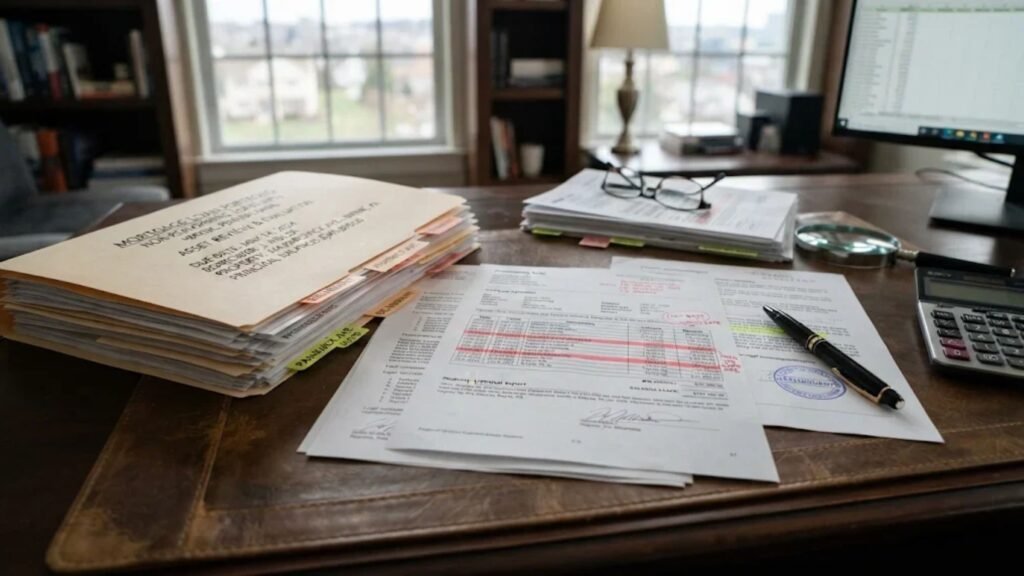
A lost note or a gap in the assignment chain is usually fixable, but the fix takes time and money, and the buyer prices both in. If you want to see what a complete file looks like, use our checklist of the documents note buyers ask for in Wayne, PA.
Stage 5: Resolution path modeling and pricing
Only now does the buyer build a number. Non-performing loan valuation is a forecast of how the loan will most likely end and what that ending is worth today. The common paths are:
- Reinstatement or modification: the borrower resumes paying under the original or restructured terms.
- Payoff or negotiated payoff: the borrower refinances or sells and pays the loan off, sometimes at a discount.
- Deed in lieu: the borrower hands over the property voluntarily.
- Foreclosure and resale: the lender enforces the mortgage through the courts and sells the property.
For each realistic path, the buyer estimates the cash recovered, the months it will take, and the costs along the way. In plain terms:
Indicative price = expected net recovery, discounted for the time to resolution and the buyer’s required return, minus due diligence and carrying costs.
The same loan can therefore support very different prices depending on which path is most likely. For worked numbers, see how much non-performing note buyers pay in Wayne, PA. To compare a sale against restructuring or foreclosure on your own figures, run them through our NPL resolution options calculator.
What strengthens or weakens a loan at each stage
Use this table to see your loan the way a buyer’s analyst will.
| Stage | What the buyer checks | Strengthens the loan | Weakens the loan |
|---|---|---|---|
| 1. Loan tape | Balances, dates, lien position, legal status | Complete, consistent data delivered in one file | Blank fields, conflicting balances, unknown occupancy |
| 2. Collateral | As-is value, taxes, senior liens, condition | Clear equity above total payoff; taxes current | Thin or negative equity; tax arrears; vacant or damaged property |
| 3. Borrower | Payment pattern, contact, hardship | Long prior pay history; borrower engaged; temporary hardship | Early default; no contact; prior failed modifications |
| 4. Legal and title | Note, assignments, title, litigation | Original note in hand; recorded, unbroken chain; first lien confirmed | Lost note; assignment gaps; contested foreclosure or active bankruptcy |
| 5. Resolution path | Likely outcome, timeline, costs | A workout or payoff is plausible within months | Contested court process is the only realistic route |
What changes when the property is in Wayne, PA

Two local facts shape the evaluation of a Wayne loan, and both are easy to get wrong.
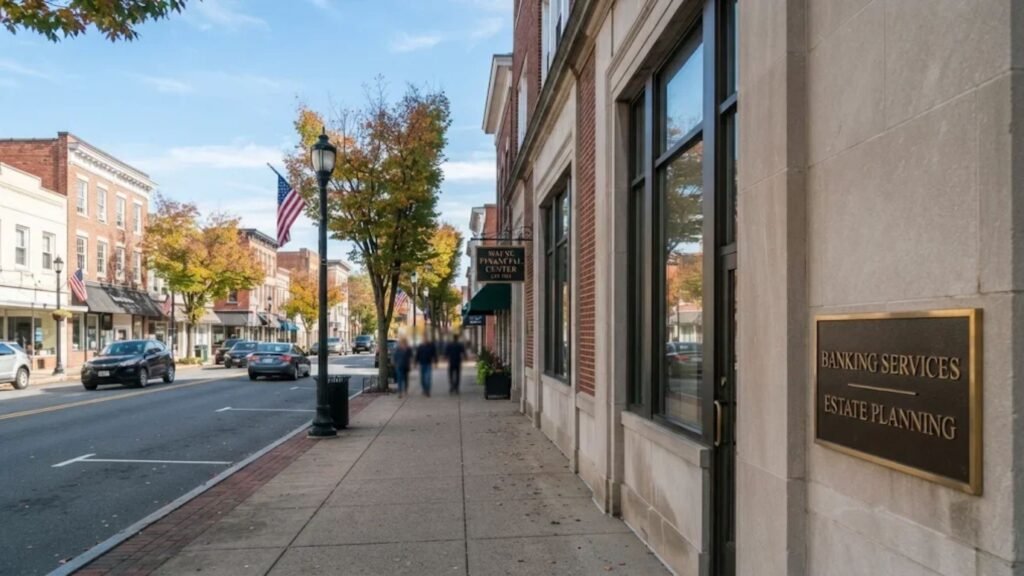
Wayne is a mailing address, not a single municipality. The Wayne name and the 19087 ZIP code reach into Radnor Township in Delaware County, Tredyffrin Township in Chester County, and Upper Merion Township in Montgomery County. The township and county decide where the mortgage is recorded, which tax office holds the tax record, and which Court of Common Pleas would hear a foreclosure. Confirm the township from the deed or tax bill rather than the street address, and put it on the loan tape.
Pennsylvania is a judicial foreclosure state. A lender must file a court action to foreclose, which generally takes longer than the out-of-court process used in some other states. For many residential mortgages, state law also requires pre-foreclosure notice to the borrower, commonly sent as a combined Act 6 and Act 91 notice, before the case can be filed. A buyer will ask whether those notices were sent, when, and whether they were done correctly, because a defective notice can mean starting over.
None of this makes a Wayne loan unattractive. It means time is a larger share of the calculation, and a file that documents notices and legal status clearly is worth more than one that leaves the buyer guessing. Treat this section as general information and ask your counsel how the rules apply to your specific loan.
How the evaluation differs for residential and commercial loans
The five stages stay the same, but the weight shifts. With a residential loan, the review leans on occupancy, borrower hardship, and consumer-protection rules. With a commercial loan, the buyer looks harder at the property’s income, leases, the borrowing entity and any guarantors, and environmental or zoning issues. Commercial files usually take longer to review because there is simply more to read.
Run a buyer’s-eye pre-check on your own loan
Before you request offers, spend twenty minutes answering the questions a buyer will ask first. Every gap you close now is one the buyer does not have to price in.
- Can you put your hands on the original note, or do you know exactly who holds it?
- Does every assignment from the original lender to you appear in the county records?
- Do you know which township and county the property sits in?
- Are property taxes current, and if not, how much is owed?
- Is the property occupied, and by whom?
- When was the last payment, and when did you last speak with the borrower?
- Which notices or court filings have gone out, and on what dates?
If you can answer all seven with documents to back them up, your loan will move through stages one and four quickly, and the conversation can focus on value.
How we evaluate loans at Buckingham Partners
We are a direct principal buyer of non-performing and sub-performing loans secured by residential and commercial real estate, so the people reviewing your file are the people making the purchase decision. Our evaluation weighs four things: collateral value and location, borrower history and performance, legal status and lien position, and the recovery potential and overall condition of the asset.
We respond to inquiries within 24 hours and typically give you a firm level of interest within 48 to 72 hours of reviewing your loan data. Because our background includes brokerage, property management, loan originations, and workouts, we look at restructuring paths alongside enforcement when we model a loan, and we keep every review confidential.
Frequently asked questions
Is an initial indication of interest the same as a final offer?
No. An indication of interest is based on your loan data and is subject to due diligence. The final price is confirmed after the buyer reviews the collateral file and title. Accurate data up front is the best way to keep the two numbers close.
Will a buyer evaluate a loan that is delinquent but not yet 90 days past due?
Often, yes. Sub-performing loans are evaluated with the same five stages. The difference is that a continued-payment outcome carries more weight in the pricing.
Does a pending foreclosure or bankruptcy stop the evaluation?
It does not stop it, but it changes it. The buyer will read the docket, estimate the remaining timeline and legal cost, and factor both into the price.
Your next step
Run the seven-question pre-check, gather what you have, and note what is missing. Then send us the loan data, even if the file is incomplete. You can request a confidential offer on your loan or call 610-550-8375, and we will tell you where your loan stands at each stage of the review.