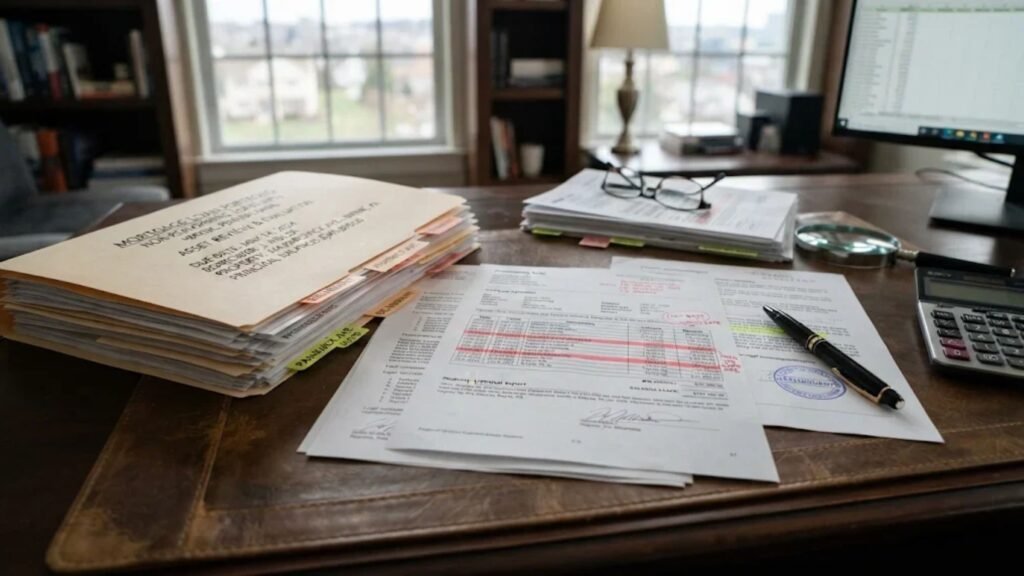
Stepping into the arena of distressed debt can feel like walking through a labyrinth where every turn presents a hidden financial risk, especially during a non-performing note acquisition. Imagine closing a major transaction on a commercial or residential portfolio, only to discover a missing borrower signature on the primary debt instrument that completely halts your legal remedies. Experienced market participants know that the true value of any distressed asset lives within the pristine integrity of its underlying paper trail rather than just the unpaid principal balance. Without performing an exhaustive audit of your collateral file before committing capital, hidden documentation flaws can quietly erode your projected yields and transform a promising investment into a legal quagmire.
What is the comprehensive process for reviewing a mortgage file?
Engaging in a thorough mortgage document review forms the absolute bedrock of any successful institutional or private debt purchase strategy. When auditors and buyers open a physical or digital collateral file, they systematically search for specific legal instruments that establish absolute proof of debt and clear legal standing. Each document within the file tells a vital part of the story, proving that the original lender followed strict federal lending guidelines and state property laws. If a single foundational paper is missing or improperly executed, the entire chain of ownership can fracture before your exit strategy even begins.
To ensure complete compliance and mitigate risk, professional due diligence teams cross-reference every physical paper against digital servicing records and county registries. They verify historical payment records, title insurance policies, and recorded assignments to confirm that the chain of ownership remains completely unbroken. For instance, you can schedule a consultation to discuss custom document auditing strategies with industry experts. By establishing a rigorous verification protocol early in the acquisition lifecycle, buyers protect themselves from inheriting unenforceable debts or facing unexpected borrower litigation.
The primary instruments examined during this initial phase include several critical legal and financial components:
- Promissory note detailing the borrower’s unconditional promise to repay the borrowed principal and interest.
- Deed of trust or mortgage instrument securing the underlying real estate collateral against default.
- Recorded assignments showing the chronological transfer of lien rights from the original lender to current holders.
- Title policy insuring the priority and validity of the lender’s lien against competing claims or judgments.
- Allonge endorsements legally attaching signature approvals and allonges directly to the promissory note.
Why missing loan documents derail asset recovery
Discovering an absent signature or an unrecorded assignment can completely halt your legal remedies in a foreclosure court. Judges presiding over foreclosure proceedings demand strict proof of standing, meaning the plaintiff must definitively prove they hold the physical right to enforce the debt. When an original wet-ink signature is missing from the promissory note, proving holder-in-due-course status becomes exponentially harder. This deficiency forces investors to pursue costly lost note affidavits or expensive judicial rectification procedures.
Beyond judicial hurdles, missing paperwork diminishes the secondary market liquidity of your distressed assets. Institutional buyers and hedge funds performing secondary due diligence will heavily discount portfolios that lack pristine documentation. Buckingham-Partners specializes in helping investors identify these critical documentation gaps before capital is ever deployed. Resolving these discrepancies proactively protects your bottom line and preserves the intended profit margins of your investments.
The mechanics of note file verification
Executing a thorough note file verification requires a methodical approach to examining every single page in the collateral vault. Reviewers meticulously inspect endorsement blocks, notary acknowledgments, and corporate resolutions to ensure authority was properly delegated. Even minor clerical errors, such as a missing corporate seal or an expired notary stamp, can create significant friction during asset liquidation or short sale negotiations.
Advanced due diligence firms utilize specialized digital tools alongside manual inspection to flag anomalies instantly. They look for discrepancies between the borrower name on the mortgage and the signature on the note. Ensuring every signature aligns perfectly across all closing disclosures and security instruments is paramount. To learn more about comprehensive asset management solutions, you can explore our platform.
Navigating title defects and unrecorded assignments
An unrecorded assignment of mortgage is one of the most hazardous traps in distressed debt investing. If the chain of assignments fails to show a continuous link from the originator to the current seller, your lien priority could be compromised. This vulnerability becomes especially dangerous if intervening entities went bankrupt or dissolved without executing proper corporate assignments. Resolving these gaps often requires tracking down defunct corporate officers to sign corrective assignments, which is a notoriously slow and unpredictable process.
Title policies must also be meticulously examined to ensure they correctly identify the insured lender and property legal description. Any ambiguity in the legal description can invalidate the security instrument entirely, turning a secured mortgage into an unsecured debt. Buckingham-Partners provides the strategic oversight needed to untangle complex title histories before you commit funds. Conducting this deep-dive analysis ensures you acquire enforceable liens rather than expensive legal liabilities.
| Document Type | Common Defect | Potential Legal Impact |
| Promissory Note | Missing wet-ink signature | Inability to prove standing in foreclosure |
| Deed of Trust | Unrecorded or missing pages | Loss of lien priority over junior creditors |
| Assignment | Broken chain of ownership | Dismissal of judicial foreclosure action |
| Allonge | Detached or unsigned endorsement | Disputed ownership of the underlying debt |
Overcoming operational hurdles in asset onboarding

Once you successfully acquire a distressed portfolio, the onboarding process begins with transferring servicing and securing original collateral. Custodians play a pivotal role in this phase by safeguarding physical promissory notes in secure, fireproof vaults. Any mismatch between the electronic servicing tape and the physical collateral file must be resolved immediately. Establishing clear communication channels with prior servicers helps recover missing paperwork and payment histories before audits begin.
Investing in continuous education and adopting standardized auditing frameworks protects your portfolio against unforeseen liabilities. You can also connect directly with industry professionals by visiting our contact page to align your acquisition criteria with current market standards. By treating document review as an active risk-management strategy rather than a passive checklist, you build a resilient and highly profitable note-investing business.
Frequently Asked Questions
What happens if the original promissory note is completely lost?
When an original promissory note cannot be found, the investor must typically file a lost note affidavit in court. This legal document asserts that the note was lost, stolen, or destroyed while in the lawful possession of the lender. However, courts scrutinize these affidavits heavily, and judges may require the investor to post an indemnity bond to protect the borrower against future claims by a third party holding the original note.
Can a digital signature replace a wet-ink signature on a note?
Historically, promissory notes required traditional wet-ink signatures because they are negotiable instruments governed by commercial law. While electronic signatures are increasingly accepted under specific federal and state electronic transaction acts, most institutional investors still prefer traditional wet-ink signatures for physical collateral vaults. Ensuring compliance with electronic commerce regulations is essential if digital promissory notes are part of the portfolio.
How do investors handle missing corporate endorsements on allonges?
An allonge is a separate piece of paper legally attached to a promissory note to accommodate endorsements when no space remains on the note itself. If an allonge lacks a proper corporate endorsement or signature, it fails to legally transfer ownership of the debt. Investors must request a corrective allonge executed by an authorized officer of the transferring entity or obtain a formal court order to validate the transfer.
Why are title searches critical alongside document reviews?
A title search reveals crucial information regarding senior liens, property tax delinquencies, and municipal code violations that may supersede your mortgage lien. Even if the loan documents are flawless, an overlooked tax lien or prior mortgage can wipe out your recovery prospects during a foreclosure sale. Combining note document review with a comprehensive title search provides a complete picture of the asset’s risk profile.
What is the ideal timeline for completing due diligence on a note portfolio?
A standard due diligence period typically ranges from fourteen to thirty days depending on the size and complexity of the portfolio. This window allows investors enough time to order collateral file bailments, review title reports, and verify servicing records. Rushing this timeframe can lead to overlooking critical document defects that severely impact the profitability of the acquisition.
Conclusion
Mastering document verification is the single most effective way to safeguard your capital during any non-performing note acquisition. By uncovering missing signatures, broken chains of title, and unrecorded assignments early, you protect your projected financial returns and streamline future legal proceedings. Implementing rigorous review protocols allows you to transition from reactive firefighting to proactive, confident portfolio management. Buckingham-Partners ensures that every single file in your collateral vault meets the highest standards of legal enforceability and commercial value.