Non-performing note investments can produce attractive returns but carry elevated, transaction-specific risks. Identifying acquisition-stage red flags is essential for institutional investors executing disciplined due diligence. This article outlines the due diligence framework, the principal indicators to monitor, and practical measures to mitigate exposure while preserving alignment with fiduciary objectives.
Due Diligence Process

Due diligence for non-performing note acquisition requires a methodical assessment of factors that affect asset viability and recovery potential. Core tasks include analysis of borrower payment histories, verification of collateral files, and review of legal documentation. Each activity contributes materially to the investment risk profile prior to closing.
Investors should prioritize a comprehensive review of borrower payment history, which provides objective evidence of repayment behaviour and credit conduct. A detailed collateral file examination is necessary to confirm valuation assumptions and title integrity. Legal-document review is required to identify contractual defects, lien priority issues, or other encumbrances that could impair recovery.
Buckingham Partners, as a resolution partner, emphasises the need for a structured due diligence framework. Their capabilities in risk assessment and portfolio management support investors in identifying transactional and post-acquisition issues and implementing remediation strategies.
Red Flags to Watch For
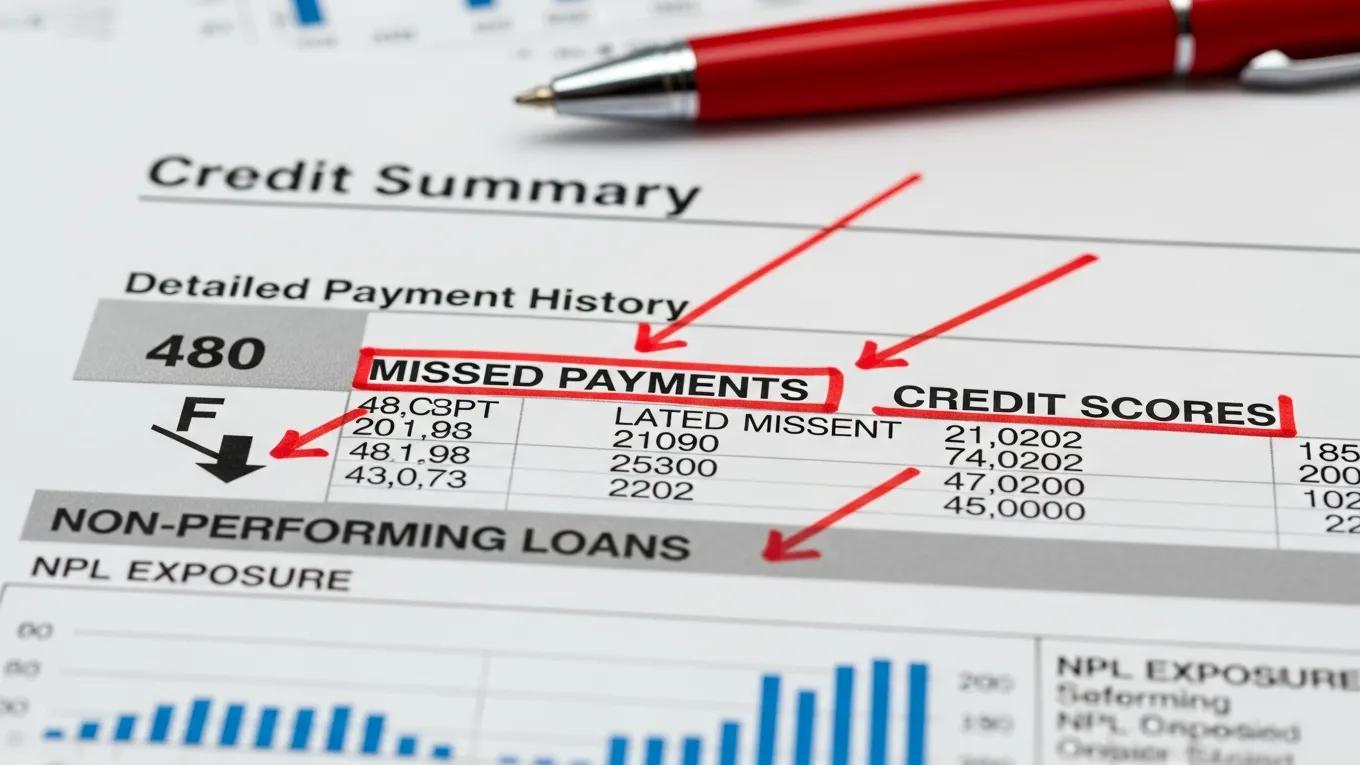
Assessing borrower financial metrics and behavioural indicators is critical when underwriting non-performing assets. Investors should monitor specific red flags that correlate with elevated default and recovery risk.
- Missed Payments: A history of missed payments is a strong indicator of potential default and should raise concerns about the borrower’s ability to meet future obligations.
- Declining Credit Scores: A downward trend in the borrower’s credit score can suggest financial distress, making it essential for investors to assess the borrower’s overall financial health.
- High Debt-to-Income Ratios: Elevated debt-to-income ratios may indicate that the borrower is over-leveraged, increasing the likelihood of default.
Buckingham Partners provides specialist guidance on recognising these indicators and applying disciplined criteria to acquisition decisions.
Frequently Asked Questions
What are the common challenges investors face when acquiring non-performing loans?
Acquirers frequently face valuation uncertainty for collateral, incomplete or opaque borrower financial information, and complex legal encumbrances. Market volatility can compress anticipated returns, and latent liabilities—such as environmental remediation obligations or unpaid taxes—can materially reduce recoveries. These issues require exhaustive due diligence and expert advisory support.
How can market conditions affect the performance of non-performing loans?
Macro and market conditions materially affect NPL performance. Economic downturns typically increase default incidence and lengthen recovery timelines. Conversely, favourable economic conditions can improve borrower cashflow and recovery prospects. Interest-rate volatility influences borrower affordability and should be incorporated into scenario analysis and stress testing.
What role does borrower communication play in managing non-performing loans?
Structured borrower engagement is a key component of asset management. Direct communication enables accurate assessment of borrower circumstances, negotiation of workout arrangements, and the potential avoidance of foreclosure. Well-managed dialogue can facilitate loan modifications or tailored payment plans that improve expected recoveries.
What tools and resources can assist investors in the due diligence process?
Specialised tools and external expertise enhance due diligence. Financial analysis platforms enable detailed credit and payment-history assessment; legal databases support review of applicable statutes and case law; and retained counsel and credit analysts provide subject-matter expertise to identify and quantify material risks.
How can technology improve the assessment of non-performing loans?
Advanced analytics and data-visualisation tools increase the speed and precision of assessments. Predictive models and machine-learning techniques can augment borrower-behaviour forecasts, while automated valuation models provide standardized collateral appraisals. Appropriate technology deployment improves decision quality and operational efficiency in diligence workflows.
What are the implications of regulatory changes on non-performing loan investments?
Regulatory developments can alter acquisition mechanics, compliance obligations, and the treatment of distressed assets. Such changes may increase transaction costs or restrict remediation options. Investors must maintain regulatory monitoring and engage legal counsel to ensure compliant execution and to mitigate legal exposure.
How can investors prepare for potential economic downturns affecting non-performing loans?
Preparation requires proactive risk management: diversify exposures, maintain adequate liquidity, and conduct regular stress testing to evaluate downside scenarios. Continuous monitoring of economic indicators enables timely strategy adjustments to protect portfolio value during adverse cycles.
What Are the Primary Risk Indicators in Non-Performing Note Acquisition?
Several primary risk indicators warrant close monitoring in non-performing note acquisitions:
- Borrower Default History: A history of defaults can indicate a higher likelihood of future defaults.
- Economic Indicators: Broader economic conditions can impact borrowers’ ability to repay loans.
- Legal Complications: Potential legal issues related to the loan can pose significant risks.
Which Distressed Asset Risk Factors Signal Potential Investment Issues?
Investors should be aware of specific distressed-asset risk factors that may signal potential investment issues:
- Borrower Credit Quality: Poor credit quality can lead to increased default risk.
- Collateral Valuation: Inaccurate or declining collateral values can affect recovery rates.
- Market Conditions: Fluctuations in market conditions can impact the overall investment landscape.
How Do Loan Portfolio Characteristics Affect Risk Assessment?
Portfolio-level characteristics—including borrower creditworthiness, collateral quality, and prevailing market conditions—shape the aggregate risk profile. A granular analysis of these elements supports informed allocation and remediation decisions.
How Should Investors Conduct Due Diligence to Identify Red Flags?
To identify red flags effectively, investors should apply a structured diligence protocol that integrates documentation review, borrower analysis, and collateral assessment, with escalation of material issues to legal and valuation specialists.
- Loan Documentation Review: Scrutinizing loan documents helps uncover any discrepancies or potential issues.
- Borrower Information Analysis: Analyzing borrower information provides insights into their financial stability.
- Collateral Valuation: Assessing the value of collateral ensures that it aligns with the loan amount.
What Are the Essential Steps in Non Performing Loan Due Diligence?
The essential steps in non-performing loan due diligence include systematic document review, borrower financial assessment, and market analysis to validate recovery assumptions and price risk appropriately.
- Comprehensive Due Diligence: Conducting a thorough review of all relevant documents and information.
- Borrower Assessment: Evaluating the borrower’s financial health and repayment capacity.
- Market Analysis: Understanding current market conditions and trends that may impact the investment.
Who Is Responsible for Each Due Diligence Step in Institutional Settings?
In institutional settings, responsibilities are typically allocated across specialised teams to ensure rigorous review and compliance.
- Initial Review by Financial Analysts: Financial analysts typically conduct the first review of loan documents and borrower information.
- Due Diligence by Legal Counsel: Legal counsel is responsible for evaluating legal documents and identifying potential legal issues.
- Post-Acquisition Management by Asset Managers: Asset managers oversee the management of the loan portfolio after acquisition.
What Hidden Liabilities Commonly Impact Non-Performing Loan Portfolios?
Hidden liabilities can materially affect portfolio outcomes. Common categories include legal claims, environmental remediation obligations, and outstanding tax liabilities associated with collateral.
- Legal Liabilities: Potential legal issues can arise from borrower disputes or regulatory compliance.
- Environmental Liabilities: Environmental concerns related to the collateral can pose risks.
- Tax Liabilities: Unpaid taxes on the collateral can affect the overall investment.
How Can Investors Detect Hidden Liabilities in Loan Portfolios?
Detection of hidden liabilities requires comprehensive document review, targeted credit and title investigations, and independent collateral assessments to surface environmental, legal, or tax exposures.
- Thorough Documentation Review: A comprehensive review of all relevant documents can reveal potential liabilities.
- Borrower Credit Assessment: Evaluating the borrower’s credit history can uncover hidden risks.
- Collateral Valuation: Assessing the collateral’s value helps identify any potential environmental or legal issues.
What Financial Impacts Do Hidden Liabilities Have on Investment Outcomes?
Hidden liabilities can increase costs, reduce net recovery rates, and introduce liquidity constraints that adversely affect investment returns and capital allocation decisions.
- Increased Costs: Unforeseen liabilities can lead to unexpected expenses.
- Reduced Recovery Rates: Hidden liabilities may decrease the amount recovered in the event of default.
- Liquidity Risk: Potential liabilities can affect the liquidity of the investment.
Which Market Trends in Non-Performing Loans Should Investors Monitor in 2026?
Key market trends to monitor in 2026 include the incidence of NPLs, regulatory oversight intensity, and interest-rate movements that influence borrower repayment capacity and asset valuations.
- Increased Incidence of NPLs: A rise in non-performing loans may indicate broader economic issues.
- Regulatory Scrutiny: Heightened regulatory scrutiny can impact the acquisition process.
- Fluctuations in Interest Rates: Changes in interest rates can affect borrower repayment capabilities.
How Is the Increasing Volume of Non-Performing Loans Affecting Risk Profiles?
The growing volume of non-performing loans is reshaping risk profiles by exerting downward pressure on asset valuations, intensifying competition for distressed assets, and increasing the need for rigorous due diligence protocols.
- Impact on Asset Valuations: A higher volume of NPLs can lead to decreased asset valuations.
- Increased Competition: More investors entering the market can heighten competition for distressed assets.
- Need for Rigorous Due Diligence: The growing complexity of the market necessitates thorough due diligence processes.
Research further underscores the critical role of governance and rigorous oversight in managing systemic risks associated with rising non-performing loans.
NPL Dynamics, Board Diligence, and Investor Confidence
The escalation of non-performing loans (NPLs) in emerging economies represents a persistent threat to financial stability and constrains economic development. This analysis examines the relationship between board governance mechanisms—with particular attention to board diligence as measured by meeting frequency and oversight intensity—and NPL dynamics within emerging-market banking systems.
The findings indicate that governance intensity enhances loan monitoring quality, strengthens provisioning credibility, and supports investor confidence. Risk Governance, Board Diligence, and Non-Performing Loan Dynamics in Emerging Economies: A Systematic Analysis, 2024
What Regulatory and Economic Factors Influence Non-Performing Note Acquisition Risks?
Regulatory and economic variables that influence acquisition risk include changes to regulatory frameworks, macroeconomic downturns that elevate default rates, and market volatility that affects asset pricing and recovery timelines.
- Regulatory Changes: New regulations can impact the acquisition process and associated risks.
- Economic Downturns: Economic challenges can increase default rates among borrowers.
- Market Volatility: Fluctuations in the market can affect the overall investment landscape.
How Does Buckingham Partners Mitigate Risks in Non-Performing Note Acquisition?
Buckingham Partners mitigates acquisition risk through a combination of disciplined due diligence, collaboration with experienced specialists, and use of advanced analytics to inform pricing and remediation strategies.
- Rigorous Due Diligence: Their comprehensive due diligence process ensures that all potential issues are identified.
- Engagement with Experienced Partners: Collaborating with seasoned professionals enhances risk assessment capabilities.
- Advanced Analytics: Utilizing advanced analytics allows for better decision-making and risk management.
What Expertise Does Buckingham Partners Offer in Risk Assessment and Portfolio Resolution?
Buckingham Partners provides specialist expertise in risk assessment and portfolio resolution, including comprehensive due diligence, navigation of legal and regulatory complexities, and ongoing portfolio monitoring to enable proactive management.
- Comprehensive Due Diligence: Their thorough approach ensures that all aspects of the investment are evaluated.
- Legal and Regulatory Compliance: They help navigate complex legal and regulatory landscapes.
- Ongoing Monitoring: Continuous monitoring of the portfolio allows for proactive risk management.
How Can Investors Engage Buckingham Partners for Due Diligence Support?
Investors may engage Buckingham Partners through established contact channels to request due diligence support and to arrange an initial assessment of portfolio requirements.
- Contacting via Email: Interested parties can reach out to brett@buckingham-partners.com for inquiries.
- Phone Consultation: Investors can call 610-550-8375 to discuss their needs and explore available services.
- Initial Consultation Process: Buckingham Partners offers an initial consultation to assess investor requirements and tailor their services accordingly.
Conclusion
Comprehensive, methodical due diligence is essential to identify red flags and protect capital in non-performing note transactions. Leveraging experienced advisers and data-driven analytics improves risk identification and supports more reliable recovery outcomes. Investors should engage appropriate expertise to safeguard investments and ensure disciplined execution.